


ASEAN AI Summit on AI-Powered Micro, Small, and Medium Enterprises (MSMEs) Growth.
All times are Philippine Standard Time (GMT+8).
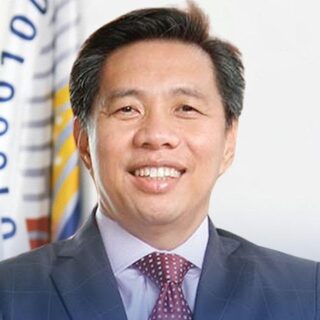
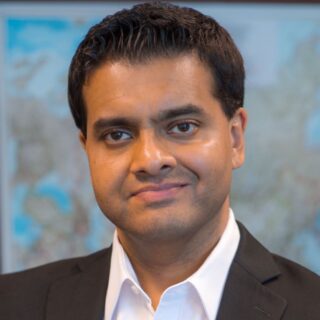
Pratish Halady is ADB’s Southeast Asia Regional Head for Private Sector Development, and works across all of ADB’s product lines to develop and execute strategies focused on private capital mobilization and private sector participation in the region. He has been with ADB for 13 years and has held prior roles in the Office of the President where he supported a strategic reorganization of the Bank, as founding member of the Office of Public–Private Partnership where he closed PPP transaction advisory projects for government agencies in Bangladesh, Uzbekistan, and the Philippines, and as head of ADB’s remedial management unit which focused on restructuring and distressed debt recovery.
Prior to that, Mr. Halady was a manager with Macquarie Capital in New York where he focused on principal investing and investment banking in the telecom and energy services sectors. Mr. Halady holds a Masters in Business Administration from the Wharton School of the University of Pennsylvania, and a Masters and Bachelors in Electrical and Computer Engineering from Carnegie Mellon University.

Yoonee Jeong is a Principal Digital Transformation Specialist at the Asian Development Bank (ADB), supporting governments and private sector partners in advancing digital transformation across Asia and the Pacific. Her work spans digital public infrastructure (DPI), AI ecosystems, broadband and non-terrestrial networks, data centers, cloud infrastructure, cybersecurity, and digital economy policy, helping countries translate digital ambitions into strategic investments and development outcomes. Her recent projects include digital government and data infrastructure development in Southeast Asia, advancing AI-native startup ecosystem and R&D capacity in Central and West Asia, expanding ADB’s private sector investment in the digital foundations and regional initiatives supporting ASEAN digital integration and AI readiness.
With over two decades of experience spanning the technology industry and international development, she has advised governments, regulators, investors, development partners, and technology companies on digital policy and national strategies, infrastructure investment, and regulatory reform. Prior to joining ADB, she held leadership and advisory roles with Telenor Group, TRPC (now part of Access Partnership), World Bank and UN-ESCAP. Her hybrid experience enables her to bridge policy, technology, and investment perspectives to support sustainable and inclusive digital development. She holds a Master’s degree in International Development Policy from Duke University, where she was a Foreign Language and Area Studies (FLAS) Scholar, and a Bachelor’s degree from Ateneo de Manila University in the Philippines.
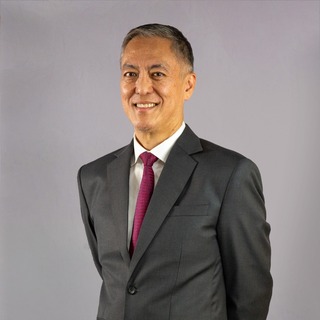
Mr. Michael G. Tan is the President and Chief Operating Officer of Asia Brewery, Inc., a leading manufacturer of alcoholic and non-alcoholic beverages in the Philippines, including energy, water, dairy soy products, beer.
Mr. Tan is also a Director of LT Group, Inc. (LTG) and was its President and Chief Operating Officer (COO) from 2012 until May 2023. LTG is one of the Philippines’s largest business conglomerates encapsulating some of the country’s most well-loved brands in alcoholic and non-alcoholic beverages under Asia Brewery, Inc. and Tanduay Distillers, Inc., banking through Philippine National Bank, tobacco through PMFTC Inc., property development through Eton Properties Philippines, Inc. and sugar refining through Victorias Milling Company, Inc. Mr. Tan led the Initial Public Offering (IPO) of LTG in 2013, the country’s largest at that time.
Mr. Tan is a member of the ASEAN Business Advisory Council (ASEAN BAC) representing the Philippines, a Vice President of the Federation of Filipino Chinese Chambers of Commerce & Industry, Inc. (FFCCCI) and is a Trustee of Help Educate and Rear Orphans (HERO) Foundation, Inc. In October 2022, he was appointed as a member of the Private Sector Advisory Council which is tasked to provide the Philippine President with advice and recommendations for economic reforms.
The Ministerial segment will provide the platform for ASEAN Digital Ministers to exchange national perspectives on AI readiness, opportunities, challenges, and priorities. The discussion will translate the substantive conversations of the Summit into a shared regional direction and identify areas where ASEAN can strengthen collective action.
As ASEAN navigates its way forward, the reality is that AI adoption is progressing at different speeds across Member States. This session evaluates the current AI readiness landscape while examining structural challenges and economic opportunities across the region. The discussion explores the interplay between regional and national AI frameworks and development of practical strategies to cultivate sustainable and inclusive growth.
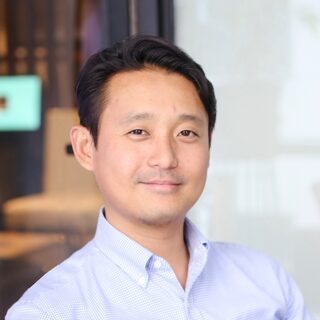
Juan Paolo T. Villonco is a Philippine lawyer and entrepreneur at the forefront of the country’s AI and robotics industry. He is Founder and CEO of Astro Robotics, the Philippine partner of Telexistence, a Japanese pioneer in AI and robotics. Under his leadership, Astro/TX is building the Philippines’ first robotics Data Factory and has secured a contract with the Japanese government to produce physical AI datasets for Japan’s robotics and AI industry — growing the team from 1 to 300 in three years.
He is also Co-Founder of Leap Studios, where he leads the AI Learning Center. He pioneered a public-private partnership with the Department of Science and Technology to help transform Filipino scientists into entrepreneurs.
The first Filipino admitted to Stanford Law School (LLM, 2014, with honors in Energy and Environmental Law), Villonco has been recognized by CNN Philippines, Entrepreneur magazine, Business Mirror, and Asian Tatler for his work driving technology and innovation in the Philippines, including expanding opportunities for Filipinos in robotics and artificial intelligence.

Mr Adhiraj Saxena is with the AI Safety & Trust Technologies unit at Singapore IMDA. He has been in responsible AI & data protection domain for 11 years. He has worked for national programs like the national digital identity ‘MyInfo’, the national AI program ‘AISG’ and more recently the ‘AI Safety Institute’. He has a Masters in Engineering from University of Illinois Urbana-Champaign.
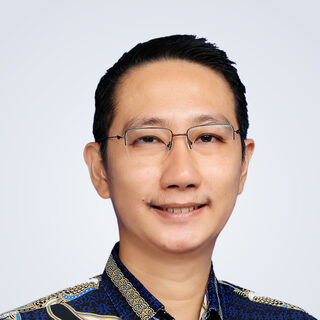
Regional Urban Data & AI Specialist (Asia Pacific) at UNDP. Board Member at Global Skills Development Council & Karsa City Lab. Digital, policy & business strategy executive with comprehensive 15++ years of exposure in business, government and technology. Successfully orchestrated & delivered digital transformation in private & public sector.
Actively volunteer in numerous domains to drive concrete impacts in city, society, nation and region. Passionate in talent building, teaching, academic research (including journal editorial board) and philosophical discussion.

Dr. Ming Tan’s interests include technology governance, multi-stakeholder approaches to digital development, public-private-philanthropic partnerships and institution-building in the public and social sectors. She is Senior Advisor at DGA-Albright Stonebridge Group and teaches at the Lee Kuan Yew School of Public Policy at the National University of Singapore (NUS). Concurrently, she is Senior Fellow and was Founding Executive Director of the Tech for Good Institute, Southeast Asia’s first technology policy think tank, and Senior Fellow at the Centre for Governance and Sustainability at NUS Business School.

Clarisse is Head of the OECD’s Data Governance and Privacy (DGP) Unit, which supports the Organisation’s work in data governance, data flows and privacy.
Before taking up her OECD role in August 2022, Clarisse was based in Singapore, where she held a first position as Senior Fellow at the Asian Business Law Institute (ABLI), a pan-Asian legal think tank anchored at the Singapore Academy of Law (SAL). At ABLI, she launched and led a flagship project on the convergence of data privacy laws and data flow regulations in 14 Asian jurisdictions. In August 2021, she created the position of Managing Director of the APAC office of the Future of Privacy Forum (FPF), the world-leading US privacy think tank. She was also an adviser to the head of the TMT practice at Rajah & Tann Asia LLC, Singapore’s leading law firm.
From 2001 to 2015, she held various positions at the French Data Protection Authority (CNIL), including head of the Department of European and International Affairs and senior advisor to the President and Secretary General in the years leading up to the adoption of the GDPR. She was a Jersey Data Protection Authority (JDPA) member from October 2018 to June 2022.
Clarisse holds a Masters in Private Law and a postgraduate degree in Intellectual Property from the University of Paris Panthéon Assas, a Magister Juris (MJur) from the University of Oxford and a Doctorate (cum laude) in Comparative Law from the Tilburg Institute for Law, Technology, and Society (TILT) in the Netherlands.
While AI-driven digital innovation presents immense potential for Southeast Asia, rapid technological shifts bring significant trade-offs and risks. This session explores a human-centered framework for AI adoption that is rooted in the understanding that technology is a tool and not an end in itself. The panel will unpack what "meaningful innovation" looks like for local ASEAN communities and evaluate success not by technical capability alone but how AI can actively build inclusive communities across the region.
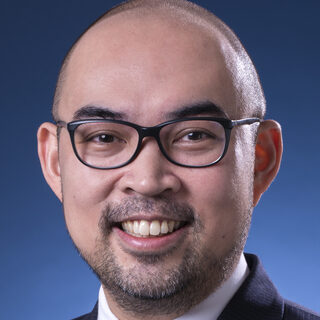
Darwin Mariano is Vice President for External Affairs for East Asia and the Pacific at UnitedHealth Group. A seasoned business and policy leader with more than 20 years of experience, he specializes in public affairs, government relations, market access, policy advocacy, crisis management, and strategic communications across the Asia-Pacific region.
He holds degrees in Psychology and Law from the University of the Philippines and a Master of Science in Science Communication and Public Engagement from the University of Edinburgh. Darwin also serves as a Commissioner of the UNESCO National Commission of the Philippines and is the Philippine Chapter Leader of the Asia Society.

Evan Jones is the founder and CEO of Standard Economics, Corp. The company’s mission is economic super-intelligence: a financial system that fully automates every layer of the economic stack in order to distribute money to everyone on earth.
Previously, Evan led revenue product at X, where he built payments, earnings, and business tools serving hundreds of millions of consumers and creators. He later joined xAI, where he stood up the consumer team ahead of Grok 3 and developed data pipelines for labor automation, reporting directly to Elon Musk.
Standard Economics develops Uno, an autonomous bank. A system that underwrites credit, lends, collects, issues debit cards, enables peer-to-peer transfers and bill pay, offers interest-bearing accounts, and creates earning opportunities through data labeling. Uno learns from real-world financial behavior and converts everyday activity into a live economic identity, expanding access to money for populations historically excluded from traditional financial systems.
The company’s long-term objective is a global socioeconomic system that improves with scale: one that increases economic participation, grows the middle class, and creates more efficient pathways for capital to reach people everywhere.
Growing up in Ireland, Evan knows firsthand how important this mission is to the continued growth and advancement of humanity.

Cazadira F. Tamzil is a public policy strategist and philanthropy practitioner with over a decade of experience across consulting, non-profits, and academia. She currently serves as Executive Director of Pijar Foundation, a youth-led institution accelerating education, innovation, and public policy action across Asia.
At Pijar Foundation, Cazadira works across sectors to help promising innovations move beyond pilots and toward wider adoption and scale. She leads the organization’s programmes, strategic partnerships, and engagement with governments, philanthropic organizations, multilateral institutions, innovators, and other ecosystem actors—connecting emerging solutions with the institutions, expertise, and resources needed to translate them into meaningful impact.
Under her leadership, Pijar Foundation has expanded its role as a regional platform for systems change, reaching over 80,000 beneficiaries. She has led multi-stakeholder efforts to align national priorities with regional innovators, including technical assistance to eight government agencies and an innovation sandbox connecting ten Asian startups with three city governments in Indonesia. Its flagship Global Future Fellows initiative has cultivated a network of 100+ leaders across eight ASEAN countries, advancing policy-relevant solutions in climate, food, and health.
Graduating summa cum laude, she was named Best Graduate of the Faculty of Social and Political Sciences in 2015. In the same year, she was selected as one of McKinsey’s Young Leaders for Indonesia. She earned a Master’s degree from the London School of Economics and Political Science (LSE), graduating with Distinction and receiving the Best Dissertation Award, and graduated summa cum laude from Universitas Indonesia.
A recognized expert, she has spoken at over ten global forums and has published four books as well as more than ten op-eds in reputable media outlets across East and Southeast Asia.
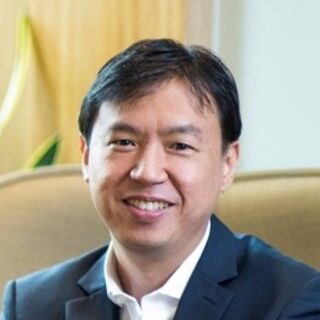
Jonathan Yap is a Digital Development Specialist (Data Infrastructure) at the Asian Development Bank’s Digital Sector Office. He brings over 15 years of experience in telecommunications and ICT across the Asia-Pacific region, with expertise in digital connectivity and infrastructure, public policy, regulation, project management, as well as business development.
Prior to joining ADB, Jon served as Senior Technical Program Manager in Amazon Leo, where he managed cross-functional licensing schedules and regulatory dependencies to support service deployment across Asia-Pacific markets. Earlier, he held senior positions at Telenor Asia in Singapore and Axiata Group in Malaysia, where he advanced telecommunications and digital economy investments across South and Southeast Asia through policy advocacy and industry reforms in areas including telecom infrastructure, spectrum management, taxation, data privacy, and broadband development.
During his time with Axiata Group, Jon was based in Cambodia, where he led Smart Axiata’s regulatory strategy and public affairs agenda, overseeing stakeholder engagement, corporate communications, sustainability initiatives, and nation-building programs. A telecommunications engineer by training, he also held technical and commercial roles, including Head of Business Development, Rollout Manager, and RF Engineer with major telecommunications service providers in Malaysia.
Jon holds an MBA from the University of Strathclyde, U.K., and a B.Eng. in Telecommunications from Multimedia University, Malaysia.

Arifah Sharifuddin is the Institute Director at the Tech For Good Institute, where she oversees the Institute’s strategic direction and operations to advance responsible, inclusive, and evidence-based digital development across Southeast Asia. In her leadership role, Arifah drives cross-sectoral collaborations, strengthens the Institute’s research and engagement agenda, and builds institutional capabilities to shape the region’s digital future. She brings a wealth of experience in operational excellence, technology ecosystem development, and the implementation of national-level development programmes.
Prior to joining TFGI, Arifah served as the Head of Digital Tourism at the Malaysia Digital Economy Corporation (MDEC), where she led transformative initiatives such as DE Rantau, Malaysia’s digital nomad programme, and spearheaded digital adoption efforts across sectors including tourism, government, agriculture, and the sharing economy.
Regional frameworks and national AI strategies lay a strong foundation for responsible AI adoption and development across Southeast Asia. To ensure these policies drive meaningful innovation that benefits all communities, developing human capability across ASEAN is critical. This closing session will discuss how public and private sectors can prepare for a future that must prioritize capability through action-oriented initiatives as ASEAN navigates its future together towards sustainable digital development.
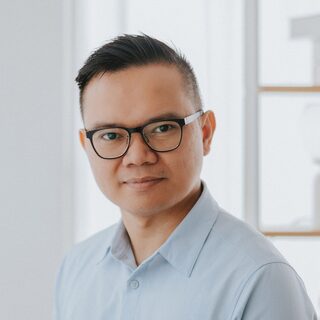
Keith Detros is a Programme Manager at the Tech for Good Institute. He leverages 15 years of experience in government affairs, evidence-based policy research, and stakeholder engagement to work on areas at the nexus of technology and public policy.
He previously served as an Economic Specialist at the U.S. Department of State’s Embassy in Manila, where he covered entrepreneurship, innovation, technology policy, and cybersecurity. Earlier in his career, he was a Research Specialist at the Philippine Institute of Development Studies.
Keith holds a Master in International Affairs degree from the National University of Singapore’s Lee Kuan Yew School of Public Policy and a Bachelor of Arts in Political Science degree from University of the Philippines Manila.
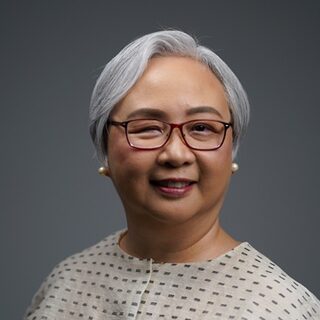
Maria Mercedes T. Rodrigo is a professor at the Department of Information Systems and Computer Science. She is the head of the Ateneo Laboratory for the Learning Sciences and co-head of the Ateneo Virtual, Augmented, and Mixed Reality Laboratory. Her research work focuses on artificial intelligence in education, learning analytics, computer science education, and educational games. In recent years, she has focused on the contextualization of these technologies in under-resourced educational environments. Her current projects include virtual reality games for informal education and the use of LLMs for medical education.
She is on the Executive Committee of the Artificial Intelligence Education Society. In 2021, Dr. Rodrigo received the Distinguished Researcher Award from the Asia-Pacific Society for Computers in Education (APSCE). She is the former president of APSCE.
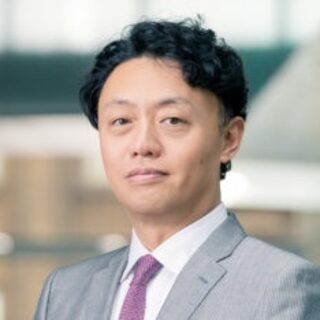
Professor at the University of Tokyo, Graduate School of Engineering, Department of Technology Management for Innovation. Graduated from the University of Tokyo in 1997 and earned a Ph.D. in Engineering in 2002. He has held research positions at the National Institute of Advanced Industrial Science and Technology and served as a visiting researcher at Stanford University. Since 2007, he has been an associate professor, and since 2019, a professor at the University of Tokyo’s Graduate School of Engineering. His research specializes in artificial intelligence, deep learning, and generative AI.
He has served as the chairman of the Japan Deep Learning Association since 2017, a technical advisor to Matsuo Institute Inc. since 2020, an outside director of SoftBank Group Corporation since 2019, an expert member of the Council for Achieving New Capitalism and the chair of the AI Strategy Conference since 2023, the chair of the AI Institutional Study Group since 2024, and a board director of the AI Robot Association since 2024, Chairperson, Tokyo AI Strategy Council, Tokyo Metropolis since 2024, an outside director of Panasonic Holdings Corporation since 2025, and an expert member of Council for Japan’s Growth Strategy since 2025, a member of Independent International Scientific Panel on AI under United Nations since 2026, Member, Expert Panel to Consider National Security from the Perspective of Comprehensive National Power, Cabinet Secretariat, since 2026.

Mr. Mohamed Shahudh is a Development Economist with extensive experience across Asia Pacific, including Small Island Developing States, Least Developed Countries, and Fragile Contexts. He currently serves as Senior Economist at UNDP Philippines, where he leads policy advisory on inclusive growth, economic transformation, and resilience.
A central focus of his work sits at the intersection of artificial intelligence and economic development — examining how AI is reshaping labor markets and productivity dynamics, and exploring governance approaches that balance progress with protection. Under his leadership, UNDP has launched its flagship Human Development Reports titled “A Matter of Choice: People and Possibilities in the Age of AI” and “The Next Great Divergence: Why AI may widen inequality between countries”, and led critical industry discussions on the implications for the Philippines and the ASEAN region.
Prior to his current role, Mr. Shahudh held Senior Economist positions across UNDP offices in Lao PDR, Malaysia, and the Maldives, where he supported governments on inclusive growth, economic resilience, and the structural reforms that underpin productive and future-ready economies.
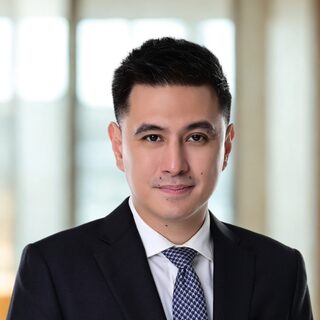
Leandro Angelo Y. Aguirre serves as the Undersecretary for Strategic Initiatives and Industry and Competency Development at the Department of Information and Communications Technology. Prior to this, he served as Deputy Privacy Commissioner of the National Privacy Commission.
He received his Juris Doctor from the University of the Philippines and his LL.M from Harvard Law School. He is a member of the academe and the Philippine and New York State Bar.
He co-authored the book “Privacy and Data Protection Law in the Philippines” with Celine A. Dee. The book examines the right to informational privacy in the Philippine privacy regulatory framework.
Program is subject to change.